Valorant calm aim explained through Rawzu's low cortisol Phoenix style and the settings that make it repeatable
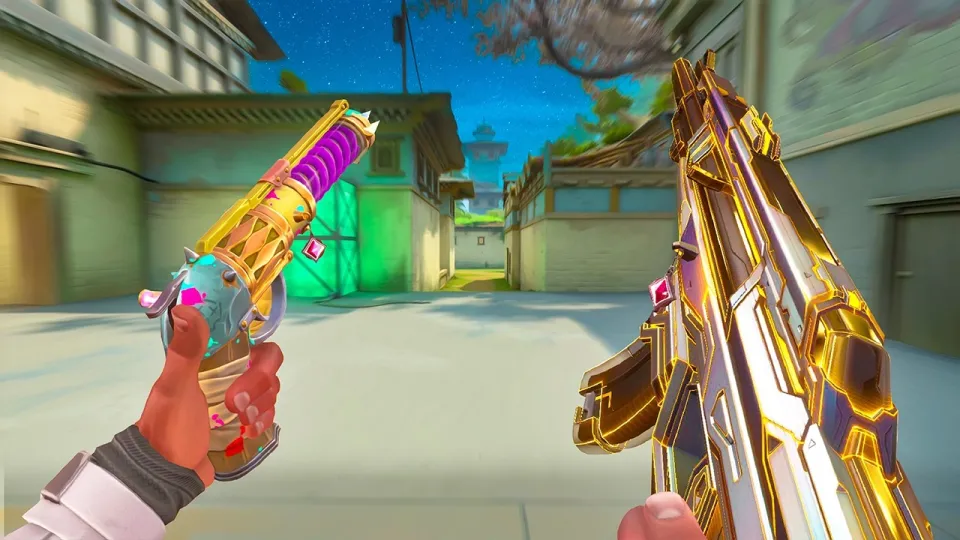
Video: low cortisol aim..
Want articles like this for your own video to promote it on YouTube and Google? Order them through the Telegram bot @sat_sit_bot. Articles with your video embedded are written and posted by the bot itself — on popular topical sites (no ads). Try it free: 50 articles on us.
Low cortisol aim in Valorant is a low-arousal aiming style where the crosshair is placed early and moved late and small, so the shot needs almost no correction instead of being flicked hard under pressure. Rawzu's Phoenix clips on the channel are the clearest popular example of the look, and the practical takeaway is that the calm is built from crosshair placement, sensitivity and fight selection rather than from a special mouse grip. If you want the same baseline on your own machine, the creator's own pointer is PC optimization for Valorant via hone.gg, which he puts first in every video description.
What low cortisol aim actually means in Valorant
Low cortisol aim is a description of behavior under pressure, not a technical term: the player keeps the mouse hand relaxed, lets the enemy walk into a pre-aimed line, and only micro-adjusts at the moment of the shot. The opposite style, often called high-energy or jittery aim, relies on fast reactive flicks and constant re-adjustment, which produces highlight reels but also misses when the first flick is off. In Valorant the difference shows up most in duelist play, because a Phoenix who entries has to clear angles while flashes and walls are still resolving, and any panic in the hand turns into an over-flick past the target.
The calm look has three visible components: a crosshair that sits at head height before the enemy appears, a mouse movement that is short and mostly horizontal, and a firing rhythm that does not start until the crosshair has stopped. None of that requires a specific brand of mouse, but it does require the sensitivity to be low enough that a full swipe across the pad covers roughly a 180-degree turn and nothing more.
Rawzu's Valorant settings and peripherals in detail
The setup published with the video is a conventional low-sensitivity tactical FPS configuration, and every value matters because it defines how much hand movement one degree of turn costs. Rawzu lists 400 DPI with 0.625 in-game sensitivity, which works out to an effective sensitivity of 250 eDPI, a range common among Valorant players who prefer arm aiming over wrist flicking. The rest of the list is equally specific:
- Sensitivity: 400 DPI / 0.625 (250 eDPI).
- Resolution: 1440x1080, a stretched 4:3 variant that widens targets on screen.
- Crosshair: 1-6-2-2, a small static-style cross with tight gap and no heavy outline.
- Mouse: Logitech G Pro X Superlight 2.
- Mousepad: Artisan Zero Soft, a control-leaning cloth pad.
- Monitor: Zowie XL2566K at 360Hz.
The combination is coherent: a light wireless mouse, a pad with enough stopping power for micro-corrections, and a high refresh rate monitor so the crosshair's final position is visible a frame earlier. Stretched 1440x1080 makes enemy models wider horizontally, which slightly forgiving horizontal flicks but does not change vertical head-level placement, so the calm style still depends on the player keeping the crosshair at head height.
How Phoenix gameplay exposes calm versus panicked aim
Phoenix is an offensive duelist whose kit is built for hunting enemies while crippling their ability to fire back, and that kit punishes panic more than most agents. Blaze creates a wall that blocks vision and deals damage, letting Phoenix cross open, defended ground; Curveball blinds enemies even when they are behind corners; Hot Hands adds a damaging molly and self-heal, and Run it Back gives a second life if the entry fails. The result is a lot of close-range fights entered from an unexpected angle, where the first burst decides everything.
A calm player uses the wall to control which angles exist, flashes, then pre-aims the one remaining head-level line and fires a short burst. A panicked player flashes, runs in, and starts flicking at whatever moves, which is why the same agent produces both clean multikills and chaotic trades. The clips on the channel lean heavily on the first pattern, and the comment section notices it: viewers single out the movement as the impressive part rather than the raw flick speed, which is exactly the low-arousal signature.
A repeatable routine for building calm aim in Valorant
Calm aim is trainable if you separate the mechanical part from the decision part, and the routine below follows the same order the settings imply. Do it in the range and in deathmatch before ranked, and keep sessions short enough that fatigue does not reintroduce tension.
- Fix the sensitivity first: pick an eDPI near 250, such as 400 DPI at 0.625 or 800 DPI at 0.31, and do not change it for at least two weeks.
- Warm up with static head-level holds: place the crosshair at head height on a wall, strafe, and stop the crosshair on the same point after each strafe without firing.
- Add one-tap bursts at close range only, since the Phoenix fights in the clips happen at wall-and-flash distance, not across long sightlines.
- Practice the stop-then-shoot rhythm: Valorant rewards standing still or counter-strafing at the moment of the shot, and firing mid-move is the most common cause of a shot that looks like a miss.
- Review deathmatch footage for over-flicks, meaning any shot where the crosshair crosses the target and comes back; that is the physical sign of a tense hand.
On the hardware side, the honest answer is that a Superlight 2 and an Artisan Zero Soft help consistency but do not create it. A stable frame rate matters more than the mouse, which is why the creator's own recommendation in the description is a system optimization service rather than a gear list.
Answering the questions viewers actually ask
The comments under the video cluster around a few practical doubts rather than around aim theory. Viewers ask how the movement looks so smooth, why certain moments in the edit land the way they do, and whether the audio is safe to play at full volume; others joke that the channel covers whatever game it feels like. Read together, those questions point at one real issue: people cannot tell which part of the result is setup and which part is practice.
The split is roughly this. Settings and hardware set a ceiling and remove friction: a stretched resolution, a control pad and a high refresh monitor make the crosshair's final position easier to see and stop. Practice and fight selection determine what happens under that ceiling: pre-aiming the angle the wall creates, flashing before the peek, and refusing to re-peek a line you already lost. The smooth movement viewers notice is the visible output of the second part, and it is the part that transfers to any sensitivity.
Useful links from the video
All links below come from the video description and are listed exactly as published.
- PC optimization for Valorant via hone.gg — the creator's own optimization partner link.
- Rawzu's original music on Spotify — the artist page behind the tracks used in the edits.
- Rawzu's Discord community — the server the description calls E-kittens packed.
Final thoughts on copying the calm Valorant look
The low cortisol aim style shown in Rawzu's Phoenix gameplay is not a secret technique but a set of habits: a 250 eDPI baseline, a crosshair held at head height before the peek, short bursts fired only after the crosshair stops, and fights chosen through Blaze walls and Curveball flashes instead of raw duels. Copy the settings first, because 400 DPI at 0.625, 1440x1080, crosshair 1-6-2-2 and an Artisan Zero Soft give you a known starting point, then spend two weeks on stop-then-shoot drills before judging the result. The channel is worth following for the visual reference, since seeing calm aim executed in real duelist fights is faster to internalize than any written description. When you are ready to remove stutter and frame drops from the equation, start with the hone.gg optimization link from the video.
Key takeaways
- Low cortisol aim in Valorant means low-arousal, low-grip aiming: the crosshair moves late and small instead of being flicked hard, so the shot lands with minimal correction.
- Rawzu runs 400 DPI at 0.625 in-game sensitivity, 1440x1080 resolution, crosshair 1-6-2-2, a Logitech G Pro X Superlight 2 on an Artisan Zero Soft, and a Zowie XL2566K at 360Hz.
- The clips are Phoenix duelist gameplay, where Blaze walls and Curveball flashes create close-range fights that reward calm tracking over panic flicks.
- The channel's own advice is hardware and system side: the hone.gg link in the description is framed as PC optimization for Valorant, not a sensitivity preset.
- Viewers in the comments ask about movement, sound levels and odd moments in the edit, which points to the same question: is the calm look copyable or just natural talent?
Source: low cortisol aim.. · Markdown version
Questions & answers
What does low cortisol aim mean in Valorant?
It describes a low-arousal aiming style where the crosshair is pre-placed and moved late and small, so the shot needs minimal correction. The player stays relaxed and lets enemies walk into a prepared line instead of relying on fast reactive flicks. It is a descriptive label, not an official term.
Is Rawzu's Valorant sensitivity good for beginners?
His 400 DPI at 0.625 in-game sensitivity equals 250 eDPI, which sits in a reasonable range for most players and favors arm aiming over wrist flicking. A beginner can start there, but the value only works if the mousepad is large enough to allow a full swipe. Keep it unchanged for at least two weeks before judging.
Does the mouse or the mousepad matter more for calm aim?
Both matter less than a stable frame rate and consistent practice, but the pad affects stopping power more than the mouse does. A control pad like the Artisan Zero Soft helps the crosshair settle after a swipe, while a light wireless mouse reduces fatigue over long sessions. Neither creates calm aim without stop-then-shoot drills.
Why does stretched 1440x1080 help in Valorant?
Stretched 4:3 resolutions widen enemy models horizontally on screen, which makes horizontal adjustments slightly more forgiving. Vertical head-level placement is unchanged, so the crosshair still has to be held at head height. It is a preference, and many players perform equally well on native 16:9.